

LVMH’s ‘The Louis’ shows China’s luxury market has a pulse

By
Bloomberg
Published
November 18, 2025
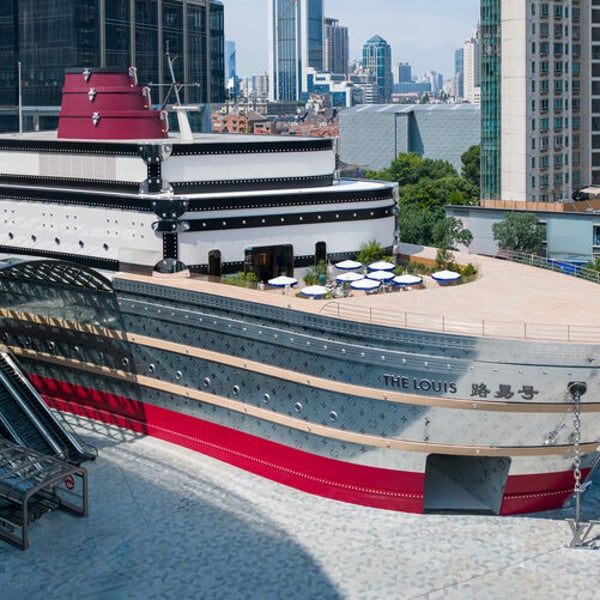
After setting sail with The Louis, a ship-shaped pop-up store and exhibition in Shanghai that proved to be an unexpected tourist attraction, LVMH Moet Hennessy Louis Vuitton SE is planning to accelerate its expansion in China.

It’s the latest sign the country’s almost three-year luxury slump may be over. But investors betting on a swift bounce back may be disappointed. Many Chinese consumers are still grappling with the housing market crash and, among the young, unemployment. Confidence must improve before people unlock their $22.8 trillion in savings, nearly double the level just five years ago.
Optimistic shoppers are crucial to the luxury giants and their investors. Share prices have recovered since June. But reaching the next level depends on Chinese big spenders, the most potent force in global luxury, who could make up for any stumble in US demand.
LVMH, Gucci-owner Kering SA, Prada SpA and cosmetics giant L’Oreal SA have all indicated that the Chinese luxury downturn may be past its nadir. Burberry Group Plc said last week that it had returned to growth in the region in its most recent fiscal quarter. An easing of the trade war, an almost 30% increase in the Shanghai Composite Index since April and spending shifting back from Japan are all helping.
“I would not say it’s party time, but it’s a hell of a lot better than a year ago,” said Flavio Cereda, who runs the Luxury Brands Fund at GAM Holding AG, and has just returned from the country. “The second quarter of 2025 was probably the bottom.”
After two years of decline, global luxury sales could grow by a percentage in the mid-single digits in 2026, with China’s expansion in the high single digits, according to analysts at HSBC Holdings Plc. But neither the companies nor their investors should get carried away.
“We are seeing some early signs, but I would not say that they are green shoots of recovery,” Johann Rupert, chairman of Cartier-owner Cie Financiere Richemont SA, said last week.
So what does it take to deliver a more pronounced upturn in the world’s second-biggest economy? It’s not that consumers don’t have the means. But widespread pessimism about job prospects because of a shift in national priorities toward artificial intelligence and other high-tech industries means shoppers are reluctant to part with their cash.
Data published last week showed a broad-based economic slowdown. Even though October retail sales got a boost from a major online shopping festival, they still grew at the weakest pace in a year.
What’s more, the property sector is not yet gaining traction. An index of new-home prices in 70 cities fell last month at its fastest pace in a year, during what was traditionally a strong period for sales. This is extremely worrying because 70% of household wealth is stored in real estate. Meanwhile, analysts at Berenberg note that individual balance sheet strains are being compounded by an ageing population.
Before everyone despairs, it’s worth remembering that there are counterintuitive bright spots in China’s consumption story — and Western players should be hustling to capitalize on the vibe shift. We’ve written before about Gen Z snapping up wacky collectibles or trendy experiences to feel happy, safe and comforted during times of uncertainty. Most of the retailers benefiting from the “emotional consumption” trend are Chinese, but that’s not always the case.
Luxury brands need to excite domestic shoppers in the same way by understanding and exploiting the zeitgeist. New designers at more than a dozen fashion houses should help reignite their interest — and visits to stores. Insights company LookLook found that the recent Chanel and Gucci shows were the most talked about in years by the 100 high-spending Chinese women in its “LuxuryVerse” panel.
Unexpected collaborations, perhaps highlighting relevant cultural traditions or an outdoor fitness craze that has taken off in cities would be helpful. LookLook found particular praise for Loewe’s partnership with ride sharing company Hello, which made the LVMH-owned brand feel relatable.
Stores that provide a fresh experience are another way to win over consumers, as The Louis has demonstrated. The latter has had a halo effect on nearby Louis Vuitton stores, and it’s a fair bet that LVMH’s new Chinese outlets will test the limits too.
Products must be good value and appeal to homegrown tastes, which have become more sophisticated. Chinese consumers were becoming “more selective,” Rupert said.
Richemont has seen a shift from a “you-only-live-once” mentality to “you only need one,” favoring jewelry. This is happening around the world but is most pronounced in Asia. Burberry Chief Executive Officer Josh Schulman said the company rediscovering its British roots appealed to younger Chinese who appreciated its “authenticity.”
Knowing how to engage with Chinese shoppers is even more important given local competition. This is most evident in beauty through the success of brands like Mao Geping Cosmetics, but jeweler Laopu Gold Co. and leather-goods retailer Songmont underline how they might become threats at the top end, too.
Luckily, 2026 is the Year of the Horse in the lunar calendar, a motif that suits the heritage of many luxury groups. But they will have to treat their most consequential market very differently from the way they once did to get spending off to the races again.